What to Do When Your Drains Are Slow on a Septic System
Slow drains are one of the first signs a septic system sends when something isn’t right. But not every slow drain means the same thing — and knowing the difference between a plumbing problem and a septic problem can save you from an unnecessary and expensive service call.
One Slow Drain vs. All Your Drains
The single most useful piece of information when a drain is running slow is whether it’s one fixture or all of them. This distinction almost always tells you whether the problem is in your plumbing or in your septic system.
If one sink is draining slowly but everything else in the house is working normally, the problem is almost certainly local — a partial clog in the drain trap, a buildup in the pipe serving that fixture, or a venting issue specific to that line. This is a plumbing problem, not a septic problem, and it doesn’t indicate anything wrong with your tank or drain field.
If multiple drains throughout the house are slow — the kitchen sink, the bathroom sinks, and the toilets all performing sluggishly at the same time — that’s a different situation. System-wide slow drainage almost always points to a problem further down the line, somewhere between the house and the drain field. That could be the septic tank, the line from the house to the tank, or the drain field itself.
Gurgling sounds from the toilet when other drains are running is another sign that the problem is systemic rather than local. If flushing a toilet causes gurgling in a nearby sink or tub, the drain system is struggling to move water efficiently — typically because there’s a partial obstruction or because the downstream capacity (the tank or field) is reduced.
Common Causes of Slow Drains on a Septic System
An Overfull Septic Tank
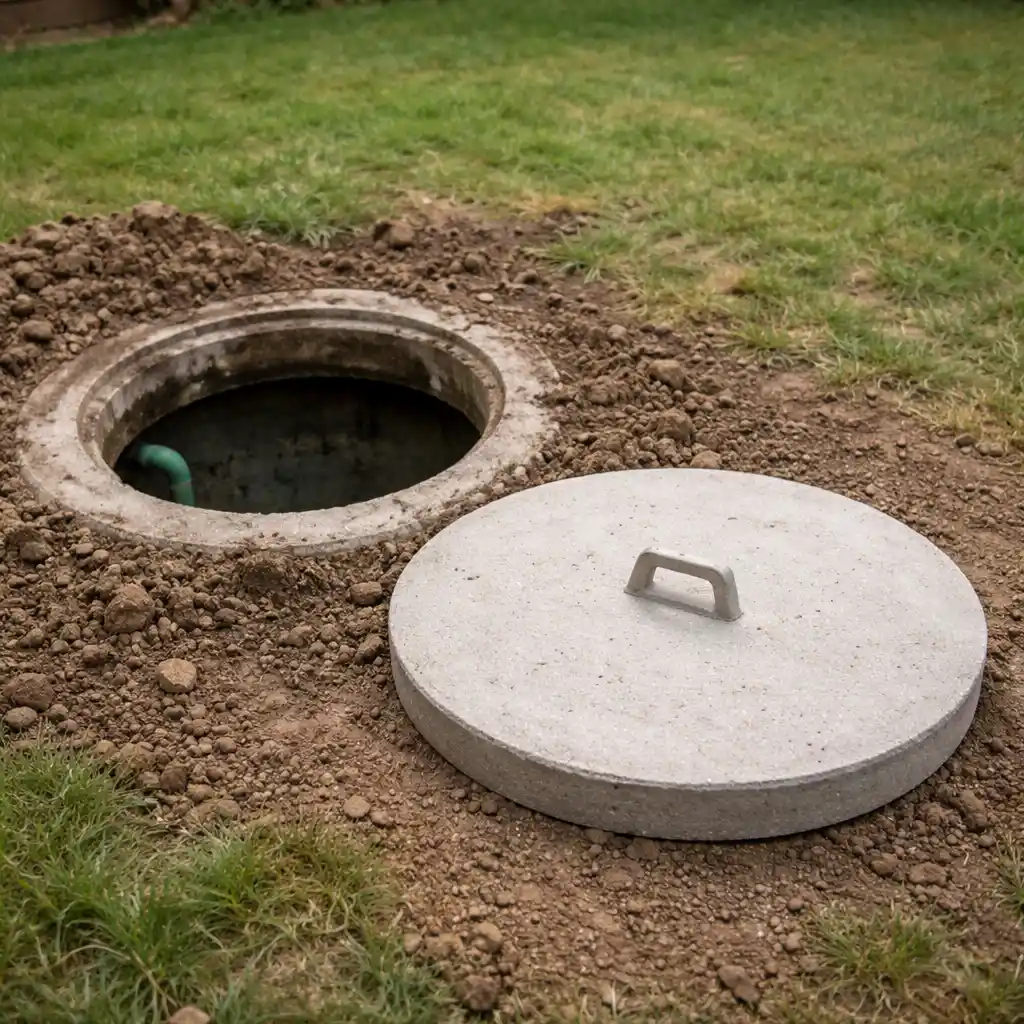
The most common cause of system-wide slow drains on a property with a septic system is a tank that’s simply due for pumping. When the sludge and scum layers build up to the point where they’re crowding the liquid zone, the tank has reduced capacity to accept new flow from the house. Drains slow down as the tank approaches its limits.
If it’s been more than three to five years since the tank was last pumped — or if you have no record of when it was last pumped — this is the first thing to check. In many cases, pumping the tank resolves the slow drain issue entirely without any other intervention needed.
A Blocked or Damaged Outlet Baffle
The outlet baffle is the component inside the tank that controls how effluent exits toward the drain field. If the baffle is damaged, has fallen off, or is partially blocked with accumulated material, it restricts flow out of the tank. Effluent backs up, the liquid level in the tank rises, and drains throughout the house slow down as a result. This is found during a proper tank inspection and is typically easy to repair once the tank is pumped and accessible.
A Blockage in the Line from House to Tank
The sewer line between the house and the septic tank can develop partial blockages just like any other drain pipe — from grease accumulation, root intrusion, a crushed section, or accumulated debris. A partial blockage slows drainage throughout the house even if the tank itself is fine. This kind of blockage typically requires snaking or jetting the line between the house and tank to clear it.
A Saturated Drain Field
When the drain field is saturated — either because it’s been overloaded, the biomat has built up to the point where absorption is severely limited, or the soil is at its capacity — effluent backs up into the tank. As the tank fills faster than it drains, the level rises and the house drains slow down accordingly. A saturated drain field is more serious than a full tank and requires its own assessment and remediation, but the symptoms at the fixture level can look similar at first.
Signs that the drain field is involved rather than just the tank: wet or soggy ground above the leach field area, effluent odors outdoors near the drain field, and slow drains that persist even after the tank has been recently pumped.
High Water Table from Recent Rain
In parts of central Kentucky — particularly properties near creek bottoms, low-lying areas in Jessamine County near the Kentucky River, and flood-adjacent ground in Clark and Madison counties — a period of heavy rainfall can temporarily raise the water table to the point where the drain field can’t absorb at its normal rate. This can cause temporary slow draining that resolves once the soil dries out. If the slow drains consistently appear after heavy rain and clear up within a day or two, this is likely the cause. If it persists longer than that, the field warrants a closer look.
Dealing with slow drains throughout your home?
We assess and service septic systems throughout central Kentucky. Fill out the form and we’ll get to the bottom of it.
Schedule a Service Visit
We’ll diagnose the problem and tell you what’s actually going on.